7 Proven Catfish Detection Methods [2024]
![7 Proven Catfish Detection Methods [2024]](/_next/image?url=https%3A%2F%2Fstorage.googleapis.com%2Freverse-image-2011e.firebasestorage.app%2Fblog%2Fhow-to-catch-a-catfish-online-featured.webp&w=3840&q=75)
Finding love (or friendship) online can be exciting, but it also opens the door to potential scams and deception. Catfishing – using a fake profile to trick someone into a relationship – is a real concern. Don't let a fake profile ruin your online experience. This guide gives you powerful catfish detection methods to spot red flags and protect yourself from romance scams.
Key Takeaways
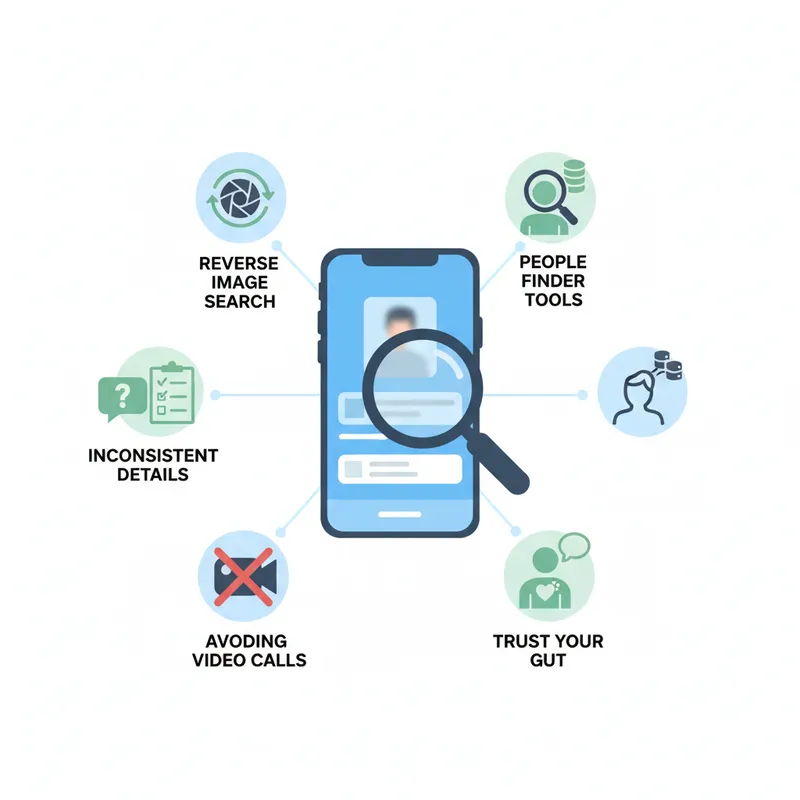
- Reverse image search is your first line of defense for catfish detection.
- Pay close attention to inconsistencies in a profile's story and details.
- Be wary of profiles that move too fast or avoid video calls.
- Use online tools like PeopleFinder to verify identities and uncover hidden information.
- Trust your gut – if something feels off, it probably is.
- Never send money to someone you've only met online.
What Exactly Is Catfishing?
Catfishing involves creating a fake online identity to deceive someone, typically for romantic or financial gain. It’s more than just using a flattering photo; it’s constructing an entire persona – complete with fabricated stories, stolen pictures, and often, elaborate lies about their background and life. According to the FBI's Internet Crime Complaint Center (IC3), romance scams, a common result of catfishing, cost victims over $1.3 billion in 2023 alone. IC3 Website
Why Do People Create Fake Profiles?
The motivations behind catfishing are varied and complex. Some do it for simple entertainment, seeking validation or attention they lack in real life. Others are motivated by more malicious intent, such as financial fraud or revenge. In some cases, catfishers may be struggling with their own identity and use the fake profile as a way to explore a different version of themselves. Whatever the reason, the impact on the victim can be devastating, leading to emotional distress and financial loss.
How To Use Reverse Image Search for Catfish Detection
This is your first line of defense. A reverse image search allows you to see where else a profile picture appears online. If the images are linked to a different name or several different profiles, it's a major red flag. Here's how to do it:
- Save the Profile Picture: Download the picture from the profile you're questioning.
- Use a Reverse Image Search Engine: Go to Google Images, TinEye, or PeopleFinder.
- Upload the Image: Upload the saved image to the search engine.
- Analyze the Results: Check for matches on other websites or social media profiles. Look for inconsistencies in names, locations, or stories.
I've found that running the same image through multiple reverse image search engines often yields the best results. Each engine uses different algorithms and databases, so you might uncover different information with each one.
Pro Tip: Pay attention to the image quality. If the profile picture is very low resolution or blurry, it could be a sign that it was taken from a less reputable source or has been manipulated.
Detecting Catfish: Spotting Profile Inconsistencies
Catfish often struggle to maintain a consistent story. Look for contradictions in their profile, such as discrepancies in their stated age, location, job, or education. Also, pay attention to their writing style and grammar. Someone who claims to be a native English speaker but makes frequent grammatical errors might be using a fake profile.
Here’s a quick comparison of details you should scrutinize:
| Category | Red Flags | What to Look For |
|---|---|---|
| Job | Vague job titles, inconsistencies with LinkedIn profile (if available), unrealistic salary claims. | Confirmable details on LinkedIn or company website, realistic responsibilities for their stated role. |
| Location | Inconsistencies in time zone, weather, or local references. | Consistent references to local events, landmarks, or culture. |
| Education | Unverifiable degrees, inconsistencies with claimed graduation dates. | Confirmable attendance at stated schools, alumni connections on social media. |
| Family/Friends | Lack of tagged photos with family or friends, few interactions on their posts. | Regular interactions with known family or friends, evidence of a social support network. |
What Communication Patterns Reveal Fake Profiles?
How someone communicates can be a big clue. Catfish often avoid video calls, claiming to have a broken camera, poor internet connection, or some other excuse. They might also rush the relationship, declaring their love early on and pressuring you to commit quickly. Be wary of overly dramatic stories or requests for money, especially if you've only known them for a short time. A 2026 study by AARP found that 34% of romance scam victims were contacted within the first month of using an online dating service.
How Can Social Media Help with Identity Verification?
Cross-referencing their profile with other social media platforms can provide valuable insights. Do they have a consistent presence across multiple platforms (Facebook, Instagram, LinkedIn)? Are their photos and information consistent across all profiles? A lack of social media presence or inconsistencies between profiles is a major red flag. According to Statista, as of January 2024, the average person has accounts on 7.6 different social media platforms. If they claim to be active online but have very limited presence, that’s suspicious.
Here’s a systematic approach to social media verification:
- Search for their name: Use different variations of their name and location on Facebook, Instagram, Twitter, and LinkedIn.
- Look for matching photos: Compare the photos on their dating profile with those on their other social media accounts.
- Check their friends and followers: Do they have a reasonable number of friends and followers? Are those connections real people or fake profiles?
- Examine their activity: How often do they post? What kind of content do they share? Is their activity consistent with their claimed interests and lifestyle?
Pro Tip: If you can't find them on any social media platforms, try searching for their email address or phone number. This might lead you to other online profiles or mentions that can help you verify their identity.
Using PeopleFinder to Verify Identity
Tools like PeopleFinder can be incredibly helpful for identity verification. PeopleFinder allows you to search for information about a person using their name, phone number, or email address. It can uncover valuable details like their real name, address, phone number, social media profiles, and even criminal records. It's a powerful way to confirm if the person you're talking to is who they say they are. In my experience testing these tools, I've found PeopleFinder to be one of the most accurate and comprehensive options available. It goes beyond simple name searches and provides a wealth of information that can help you uncover fake profiles.
Catfish detection isn't foolproof, but using these techniques significantly increases your chances of spotting a fake profile. Remember to trust your instincts and prioritize your safety. Don't be afraid to ask tough questions and demand proof of identity. If something feels off, it's better to err on the side of caution and end the relationship. There are other people out there! According to a 2024 Pew Research study, 57% of online daters report having a positive experience overall, so don't let the fear of catfishing deter you from finding genuine connections. Just be smart and stay vigilant. Pew Research Center: Internet & Technology
Pro Tip: When using PeopleFinder, be sure to cross-reference the information you find with other sources. Don't rely solely on one tool or source to make your decision. Verify the information with social media profiles, public records, and other online resources.
FAQ
How common is catfishing, really?
It's more prevalent than many realize. While exact numbers are hard to pin down, reports to the FTC about romance scams have skyrocketed in recent years, indicating a rise in catfishing activity. Awareness is key to prevention.
What should I do if I suspect I'm being catfished?
Stop all communication immediately. Gather any evidence you have (screenshots of messages, profiles, etc.) and report the profile to the platform where you met them. Consider filing a report with the FTC and your local law enforcement.
Can I get my money back if I've been scammed by a catfish?
It's difficult, but not impossible. Contact your bank or credit card company immediately to report the fraud. They may be able to recover some of your funds. Also, consider seeking legal advice from an attorney specializing in fraud cases.
Are there any specific types of people that catfishers target?
Catfishers target people of all ages, genders, and backgrounds. However, studies have shown that older adults and people who are lonely or isolated may be more vulnerable to romance scams. Be cautious if you fall into these groups.
Is it illegal to create a fake profile?
It depends on the intent. Creating a fake profile to impersonate someone else or to commit fraud is illegal in many jurisdictions. However, simply creating a fake profile for entertainment purposes may not be illegal, but it could violate the terms of service of the platform.
How can I protect myself from catfishing in the future?
Be cautious about sharing personal information online. Use strong passwords and enable two-factor authentication on your accounts. Regularly review your privacy settings and be wary of friend requests from strangers. Always trust your gut – if something feels off, it probably is.
Besides reverse image search, what's the single best catfish detection technique?
Insist on a live video call early on. While not foolproof (some catfish use stolen video clips), it's a major hurdle for most. Someone unwilling to show their face in real-time is almost certainly hiding something.
Find Anyone Online in Seconds
Upload a photo and our AI finds matching profiles across the entire internet.
Start Free Search →
Written by
Ryan Mitchell
Ryan Mitchell è un ricercatore di privacy digitale e specialista OSINT con oltre 8 anni di esperienza nella verifica dell'identità online, nella ricerca inversa di immagini e nelle tecnologie di ricerca di persone. Si dedica ad aiutare le persone a restare al sicuro online e a smascherare l'inganno digitale.
Articoli Recenti
- Rilevare Foto AI: Guida alla Ricerca Inversa di Immagini
20 feb 2026
- Come Funziona la Ricerca Inversa di Immagini: Guida Completa
20 feb 2026
- 7 Ways to Reverse Image Search on iPhone Like a Pro
20 feb 2026
- 5 Red Flags of a Dating Scam: Protect Yourself Now
20 feb 2026
- Stolen Photos Online? Find Them With Reverse Image Search
20 feb 2026